
Interviews from Publishing's Coalface: James Mayhew
Author and illustrator, James Mayhew talks children's books, cancel culture and free speech

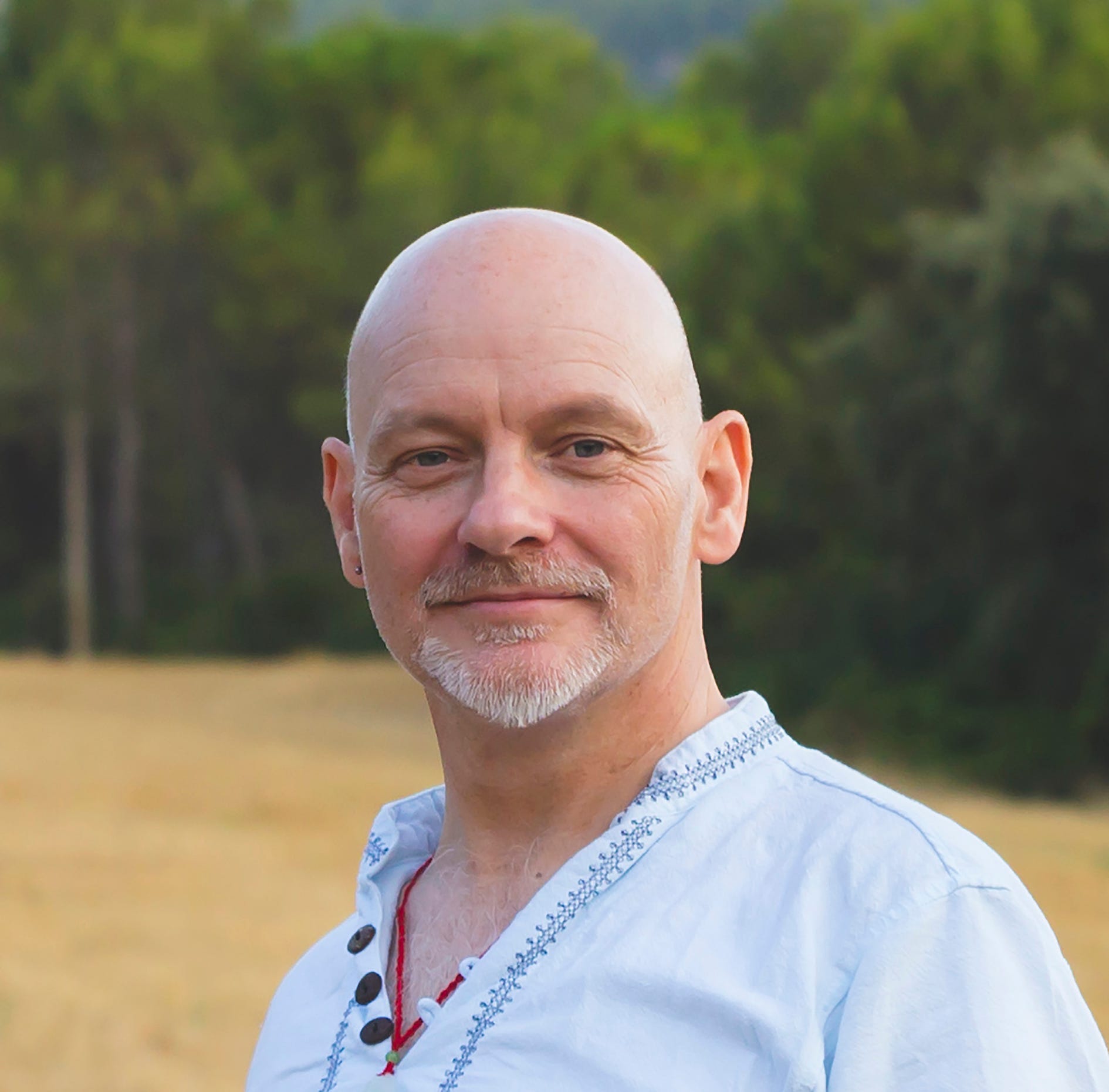
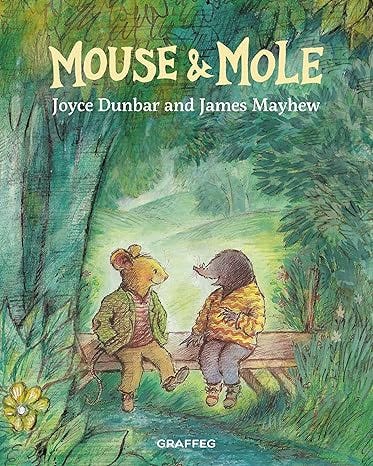
Seen in Publishing is delighted to welcome author and illustrator James Mayhew, who is the perfect embodiment of someone who has had the courage to stand up to their friends. James has been creating books for children for over 30 years. His many titles include the Katie series, Ella Bella Ballerina and Koshka’s Tales. James also works with musicians and symphony orchestras, presenting concerts for children that incorporate music, stories and art created live on stage, illuminating classics like The Four Seasons, Carnival of the Animals and The Firebird. This has inspired his Carnegie nominated books Once Upon A Tune and the companion title, A Symphony Of Stories. Alongside his own stories, James is also the illustrator of Gaspard the Fox by Classic FM’s Zeb Soanes (adapted as a concert work by Jonathan Dove, for the RSNO) Joyce Dunbar’s Mouse & Mole series, and the Mrs Noah books by Jackie Morris. He is a recipient of the New York Times Illustration Award, many times nominated for the Carnegie Medal for Illustration, and in 2022 he won the inaugural Polari Children’s Book Prize for Nen and the Lonely Fisherman (with author Ian Eagleton). He lives with his husband, Toto, on the border of Suffolk and Norfolk, where the big skies and gentle light are perfect for artists.
How long have you been working in children’s books and what changes have you seen in the industry?
A long time! My first book was published in 1989, and even before that I was illustrating the covers for novels. My first proper illustration commission was in 1987, for Virago Press - Nell Dunn’s Up The Junction - almost 40 years ago. So much has changed. I think it’s a good deal harder to make any kind of living now, compared to when I started out. The business model is flawed, and the way book selling works is completely different since the end of the Net Book Agreement. The obsession publishers have with so-called “celebrities” is a worry, too. I think anyone should be able to write a book but should only be published by going through the same process that everyone else does: years of rejection and proper editorial scrutiny. There is also the digital element, especially in illustration. There are a handful of illustrators who use digital tools really well, but a lot of digital illustration looks like homogenised mush to me, I’m afraid. Some publishers tell me I’m the only illustrator on their books who still sends in original hand-made art. That makes me rather sad.
What inspired you to go into children’s books?
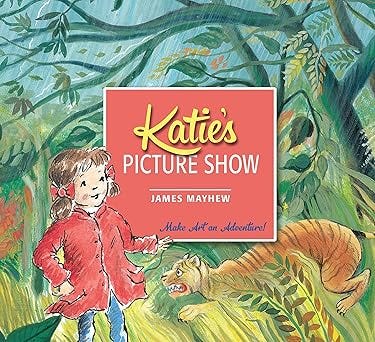
I loved looking at illustrations in books as a child. I was slow to learn to read, and relied a lot on those images, and was fascinated to learn how they’d been created, what tools and techniques were used. Later, when I was an art student in the 1980s, most of the other illustration students worked towards a career in advertising - that’s where the money was. But my work was always more traditional, and I was always drawn to narrative topics. The tutors on my course, at Maidstone College of Art, included Gerald Rose and Wendy Smith, both successful children’s book illustrators. It was they who suggested this would be a good route for me, and in fact they proposed I develop a book idea for the Macmillan Children’s Book Prize (an annual picture book competition for students). In the end, they rejected my submission and it was never entered into the competition, but I subsequently showed my “dummy book” to Orchard Books - and they loved it. That student project became my first book: Katie’s Picture Show, still in print after 37 years.
What are the main messages you want children to get from your books say your Mouse & Mole series? Or your Katie series?
Every book is different, of course, but a lot of my work explores the creative arts: The Katie series explored magical art galleries, where pictures come alive; Ella Bella Ballerina discovers the fairytales in the famous ballets; Once Upon A Tune and A Symphony of Stories collect traditional tales that inspired great classical music. I’ve illustrated Shakespeare and classic poetry. So the Arts are often at the core, and I want children to feel that these subjects are fun and accessible. Many people assume I’m “posh” because of the subjects I explore. But I come from an ordinary working-class family and went to ordinary state schools in Lowestoft in the 1970s. But I developed this love of art, music, story… and I want to share that! “Ever the evangelist” as an orchestra conductor described me recently!
Beyond that, I’m definitely drawn to projects that resonate with me, and the child I once was. I was badly bullied at school. As a result, I often find I’m rooting for the underdog in a story. I’m attracted to stories with warmth, humour, well written relationships between characters (like Mouse & Mole), and I also LOVE to retell traditional stories from all over the world. They are a treasure trove of insight to other lands, other cultures - and I think that’s important for children to experience.
How has children’s publishing altered in relation to free speech since you started? Have acceptable topics increased or narrowed?
Publishers have always had a tendency to the follow the “bandwagon” and this has got much worse I think. Whereas limitations used to be from the point of view of child welfare: “Don’t show a child holding a flame”, that sort of thing, nowadays the shift is clearly towards the “cool”, woke or politically-correct agenda. There’s a lot of “box ticking” in children’s books.
On the one hand, freedom of speech has increased, insofar as certain topics are concerned. But only if it’s right sort of free speech. There is much hypocrisy. So in that sense, I don’t think “free speech” in children’s publishing really exists at all. When it comes to topics, there is almost always an agenda.
Do you believe that free speech assists creativity?
I think true free speech is important to society, but I also think “free speech” has become a lazy term. What does it really mean nowadays? It seems one person’s “freedom” can be another’s worst fear, and certain people deliberately abuse the concept. Of course, I believe in democracy and freedom of speech in general, but in my field, children’s pictures books for the very young, there will always be restrictions (which can sometimes be a spur to creative thinking and finding solutions).
With picture books there has to be responsibility, accountability, and reason. Plus the editing process will weed out anything the editor or publisher doesn’t like. Writing for children is a very different and very specialised process. Having said all that, there have been some recent books that really push those boundaries, and not in a good way - the abuse of free speech I mentioned. I definitely don’t think forcing an agenda helps creativity.
How did you feel when you witnessed various cancellations of children’s authors?
Progressively unsettled. It wasn’t apparent (to me) at the beginning, how bad it was going to be. A nasty jibe here or a little Twitter spat there… but as we all now know, it was more than that. It was a concerted, deliberate, obsessive campaign of attacks over a prolonged period. It took me a while to wake up to that. I’m a bit of a “Pollyanna” and always look for the good in people. I was naive. It’s been a shock to see how vile people can be and the lengths they will go to, to cling to an ideology. I have also been disillusioned to see so many writers and illustrators I once admired capitulating to this.
Bravely, you changed your original position about Rachel Rooney. What changed your mind?
I think Rachel Rooney is the brave person in this story. I was well acquainted with the perpetrator of this infamous cancellation and had been supportive and understanding when her child transitioned. This coincided with my own coming out, rather late in life, as a gay man. Suddenly, I was part of this “inclusive” LGBT+ community, and like so many people I went along with it, and I believe I did so with good intentions.
When Rachel was attacked over her book My Body Is Me, the call went out on Twitter for children’s authors to support that attack. Stupidly, I did so. Looking back at those tweets, it’s clear to me now that the book community was essentially bullied into acquiescence. I now really regret that friendships were abused for a personal agenda, where “kindness” became coercion. That’s no excuse for my part in it, however. I was wrong. Rachel blocked me - understandably. As a result I didn’t see what happened to her next, the battle that was fought and the cancellation she faced.
Around this time I’d had a very profound conversation with my sister, who was much relieved that I was prepared to listen to her perspective, as a feminist, and to debate. That woke me up to the reality of the situation, and what was at stake for women and homosexual people.
A couple of years later, Rachel returned to Twitter with a new account, and I quickly became aware of her terrible experiences. I was genuinely mortified. I immediately wrote to Rachel, apologising wholeheartedly, and she graciously accepted.
Whatever your stance, what I find really abhorrent is the idea that someone with a different point of view to your own must be silenced. I know many people who vote differently to me, and who hold opinions I don’t agree with. But I still value them as people and some are actually really good friends.
Have there been any consequences for your career since you started speaking up for women’s rights?
Cancellation comes in many guises I realise. No sooner had I apologised to Rachel, than the attacks from those who support gender ideology began. Some were public, but most came in a cowardly series of really vicious and quite threatening private messages. I tried to discuss my position calmly with a few, but when they said: “no debate” they clearly meant it. It was all or nothing. Sadly, a swathe of friends and contacts have fallen by the wayside, now, and I regularly have to block people. However I am deeply grateful to the many people who publicly defended me and supported me and made me welcome in a new community. It is also the case that those who sent private messages in support of my stance vastly outweighed those who attacked me. The tragedy is that so many of them felt unable to be public about it. A ridiculous climate of fear and intimidation.
Professionally, it’s harder to pinpoint true consequences. Some cancellations are almost invisible. It seems certain publishers, with whom I’ve had very long and successful relationships, have cooled. Although I can’t prove why that has happened, I suspect I’m on a blacklist somewhere… Certain book festivals, and bookshops, have either ignored me or cancelled plans. I have my suspicions!
The thing is, for me, integrity is essential. It’s simply not up for negotiation. I’ve never sold out with books I don’t believe in, and I cannot throw my principles out of the window on this topic either.
Do you think we are beginning to see a shift in the way that children’s publishing looks at LGBTQ books?
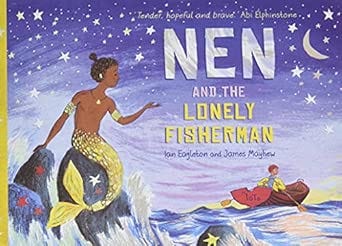
I certainly hope so! In a way, “children’s books” is a misleading term, you cannot compare what’s happening in YA books with picture books. I think it’s understandable to have some books that allow children to see that there are different kinds of people in the world - my life may have been rather different, growing up, if I’d seen a positive representation of gay characters in books. That was in my mind when I agreed to illustrate Nen and the Lonely Fisherman (by Ian Eagleton), which won the inaugural Polari Prize for a children’s book. This was followed with The Frog’s Kiss a collaboration with my husband, Toto. Both are gentle fairytales. They are LGB books really. That said, I feel I’ve explored that area sufficiently, I have no great desire to be a one-trick pony and endlessly regurgitate that same theme.
As a previous winner, I was disappointed that the Polari Prize capitulated to bullying from the transactivists over John Boyne’s nomination last year. I think it was the wrong decision, but again, I got attacked online for saying so - resulting in another wave of cancellation and blocking. All these rather superior authors, suddenly “disappointed” in me! (if only they knew what I thought of them!). This all suggests that publishing is still captured by trans ideology, and there is still a long way to go.
When I visit schools I am sometimes horrified to see posters and displays that twist truth. The ideological game of words and redefinition of homosexuality to “same gender-attracted”, the enforced acceptance of the “reclaimed” word “queer” (a word I detest) are not what I waited so long to come out for. They do not represent ME. I believe the “Gay Community” (as it used to be called) have paid a huge price for allowing the other groups to cling to their coat tails. Homosexual people do not need affirmation. They do not need drugs, surgery or a costume. Whether I tell anyone or not doesn’t change the fact that I am gay. I believe sexuality and gender identity are completely different things, and their forced conflagration has done huge harm, and (ironically) made publishers more cautious of “inclusive” material. Certainly, international rights in many big and important territories cannot even be considered with a “queer” book for children now. So in simple economic terms, that will limit what gets published.
What’s next for James Mayhew?
More of the same! I’ll be continuing to write and illustrate for children, books that I believe in, books I think deserve a place on a bookshelf. I am my own worst critic, and if it doesn’t feel right, I don’t do it. The Arts continue to be the driving force of my work - I want all children to feel Art and Culture belong to them. It’s been my mission for almost 40 years, and I’m far from finished! This year I will complete the long running Mouse & Mole series (by Joyce Dunbar), and publish a new illustrated retelling of Prokofiev’s Peter And The Wolf. I’ll also be working with orchestras, presenting concerts, visiting schools, and continuing to stand for what I believe in - on all subjects!
Thanks so much James, for sharing your thoughts on children’s books, cancellation culture and free speech. We look forward to seeing what you produce next! To find out more about James’s work visit: James Mayhew - Author & Illustrator.
This interview was part of our Interviews from Publishing’s Coalface series. The previous interview was with novelist and critic Amanda Craig.
James is one of the” brave gay men” I was thinking of in my own interview. So pleased he has once again spoken up here! He’s also, and it’s no coincidence, one of the most talented children’s authors as his pictures show. Thank you
What a thoroughly decent human he is. I hope his calling continues going from strength to strength ❤️