

Antidotes to Book Burning is a new occasional series focussing on how to bring sanity back to children’s publishing during the National Year of Reading.

Julia Williams has worked in publishing for nearly forty years as both an editor and a writer. In the 1990s she worked at Scholastic Children’s Books, before going freelance in 1998, when she also turned her hand to writing. Julia has published ten books with Avon. Julia returned to the workplace in 2014, working for Mills & Boon for seven years, and left to go freelance again partly as a result of observing the growing intolerance in the publishing workplace towards free thinking. She is currently working on a new novel. Julia’s substack is JuliasBookChat.
When I was growing up, children’s books were aimed at, well – at children. The seventies were truly a golden age of children’s writing. The Puffin Book Club, edited by the inimitable Kaye Webb, was going strong. In my bookish household, birthday and Christmas presents usually included one PBC offering, which is how I encountered authors like Joan Aiken, Philippa Pearce, Rosamund Sutcliff, and many others. We had a wealth of riches to choose from. I probably owe my lifelong love of reading to Kaye Webb and all the brilliant editors of her generation who brought such wonderful books into my life.
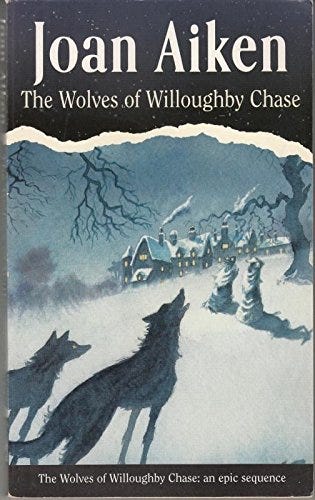
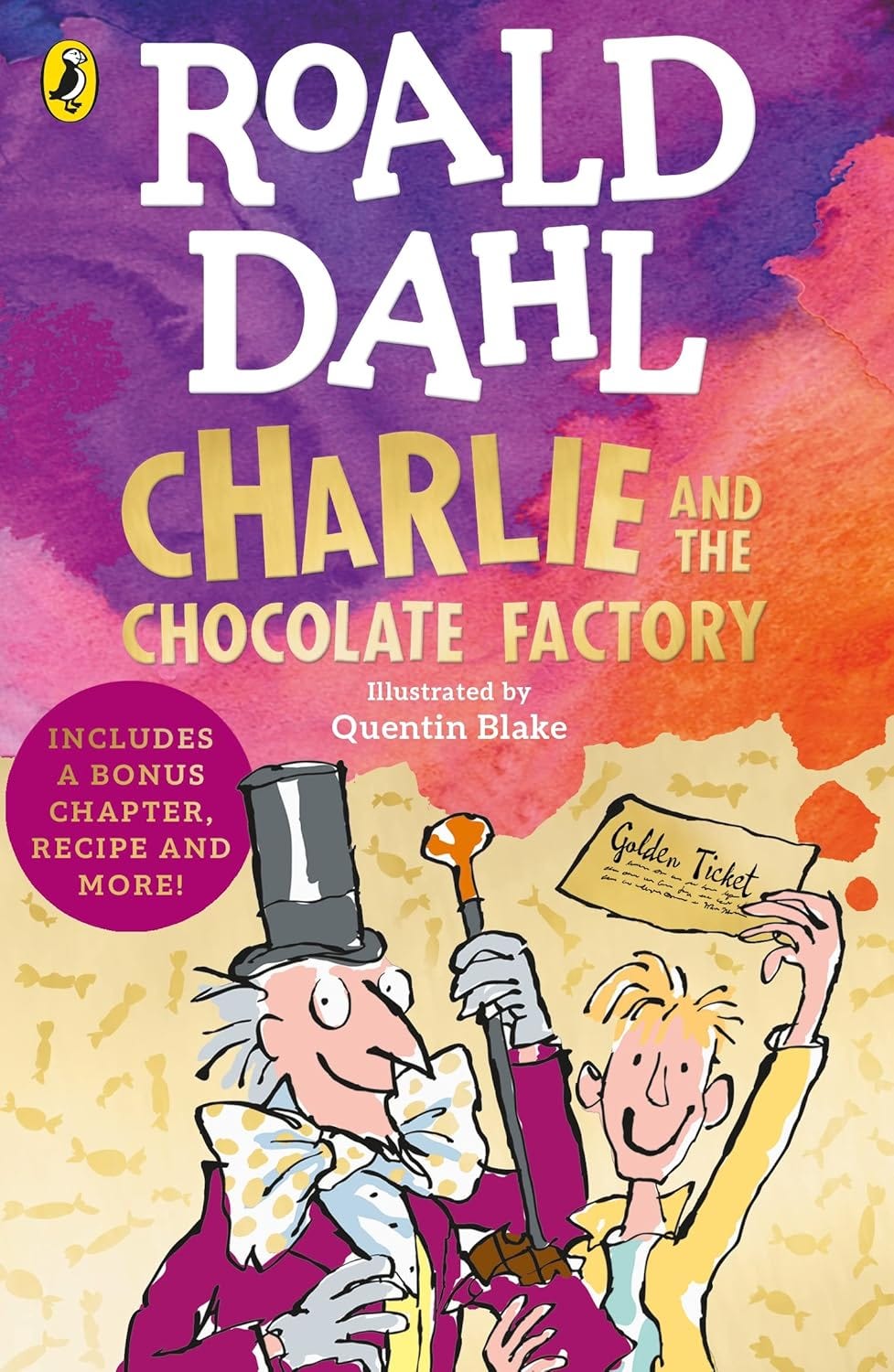
However, when I hit the age of twelve/thirteen, that well of writing dried up. I remember sneakily reading my younger brother’s copies of Charlie and the Chocolate Factory and Eight Days of Luke and feeling a bit silly because they were supposedly too young for me. But there was nothing that seemed to be aimed at my actual age group. Although Judy Blume was published in the seventies (her work hadn’t made it to my North London library), teen fiction as we know it now didn’t really exist in the UK.
The term YA fiction was first coined in the US in 1942 (Young Adult Literature) but librarians there were still struggling with how to reach teenage readers in the seventies (A Brief History of Young Adult Fiction). As far as I can recall, we might have had books that were aimed at older readers, but there wasn’t a specific range of books targeting teenagers. I remember devouring Joan Lingard’s Sadie and Kevin series, which I loved, but also coming across a book (whose title and author I forget) set in a progressive boarding school which featured a lot of sex and complicated emotions that made twelve-year-old me very uncomfortable. Nothing else I read seemed to fit the person who I was then.
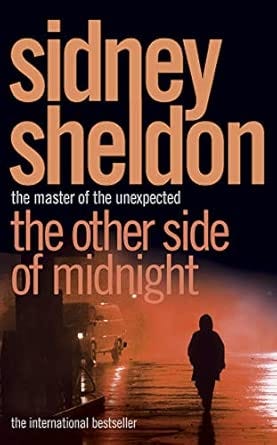
With nowhere else to go, I gravitated to adult books, mainly genre-based. I devoured everything I could by Agatha Christie, Jean Plaidy, and Stephen King. Then, thanks to a school friend who had access to her older sister’s rude books, I also read a wide range of authors I probably shouldn’t have at that age: Sidney Sheldon, VC Andrews, Ira Levin, and the like. My mother would have been horrified, but like my peers, I was curious about sex, even though I was most definitely not having it.
During the eighties, when I was reading books in the adult section, UK publishing invented the teen books’ category, with the likes of Puffin launching Puffin Plus, and Andre Deutsch their Adlib series. Many of those books were great (Sweet Valley High for eg, was a massive hit with teenage girls), but a lot of the worthy coming-of-age stories would have bored the pants off of me, had I been the right age to read them.
By the time I started working in children’s publishing in the nineties, another shift was going on: the introduction of YA fiction. During the period I was at Scholastic Books, the publishing convention was to set age ranges for books but not to label books with them. Children read the same things at different rates and ages, so most publishers didn’t specifically age-range, in order not to put off an older, perhaps struggling, reader who might pick up a story aimed at younger children.
The age ranges were as follows:
baby/toddler books (your typical soft felt/board book)
picture books (loosely aimed at 3-5, but varying between 2-6)
stories aimed at 5-7s (light on text, heavy on illustration); stories for 8-10s (more text, less illustration)
stories for 10-12s (longer text and no illustration)
YA stories (12+)
Despite the lack of social media, we were very sure of our markets. We knew for example (readers wrote to tell us) that series like The Babysitters Club (8-10) were read by children as young as seven and as old as thirteen, while Point Horror (12+) could be read by anyone between the ages of nine and fifteen. While we encountered some pushback with Point Horror from evangelical Christians, the stories in the main were pretty tame. Especially by today’s standards. We rather assumed that we’d lost most of our readers after fifteen. We certainly weren’t thinking of older teenagers as a potential market, since most of them would have either become bored of reading by then or gone on to adult books, as I had.
I mention all this because I think there is huge confusion today about what constitutes a children’s book and what is appropriate material for children to read. Age ranges still tend not to be put on books. I’d say that categories remain similar to the period when I was in the business, though 5-7s probably now get referred to as chapter books, and 8-10s as middle grade, but there are two notable differences.
Firstly, while we would have graded YA as being for readers 12+, accepting they would have fallen away by the age of fifteen, nowadays YA seems to target 12-18s. (There were some exceptions: I did publish books that had more difficult material, including a teacher/pupil love story; a crime series that featured rape and racism; and a schlocky soap series that featured sex, drinking and drugs. All of those were aimed very squarely at 14+, had deliberately sophisticated covers to appeal to an older reader, and warnings on the back about content.)
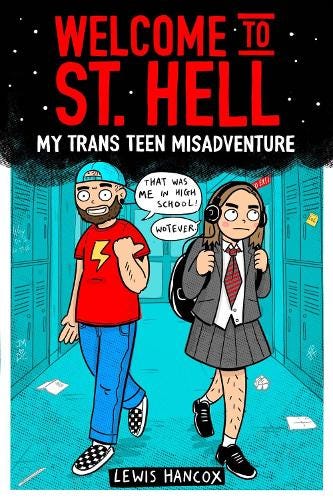
Suggesting that YA should encompass a transformative period of six years seems odd to me. A twelve-year-old has very little in common with an eighteen-year-old, and what the two groups are reading (and what is appropriate for them to read) will be very different as well. I’ve also noticed a trend, no doubt influenced by anime, for covers to be cartoonish, which makes some more mature books appear suitable for a younger age group. This is not always the case (Welcome to St Hell, nominated for the Whitbread Award, being a prime example). We always worked on the principle that children wanted to read up, not down, so we made our YA covers look as sophisticated as possible while keeping the content suitable.
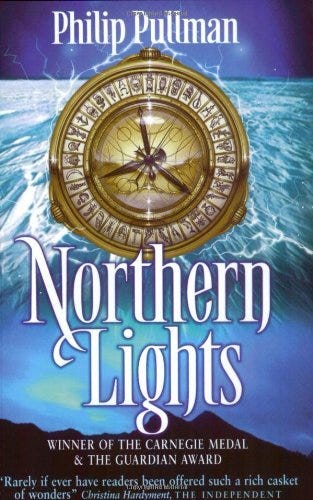
Another new category has emerged in recent years: New Adult, targeting readers aged 18-25. As far as I can tell, the idea is that teenagers making the transition from childhood to adulthood are helped by reading about people going through the same experience. (You can read a helpful explanation here: What Is New Adult Fiction? All You Need To Know) While there is nothing wrong with that, I do object to the notion that teenagers will adapt more easily to adult books if New Adult books are written as a continuation of Young Adult books, in a similar easy and unchallenging style. This, I think, does a disservice to readers. At the same time that I was publishing Point Horror for teens, Scholastic also brought out Philip Pullman’s Northern Lights, aimed at the same age group. Northern Lights can claim to be the first “crossover” book in that it held appeal for both adults and children. It is a complicated read for twelve-year-olds, but highly literate children as young as ten can enjoy it. It is my firm belief that the publishing world owes it to children to publish books this challenging for their audience. To let them only read the fast-paced kid-lit kind of fiction I was publishing lets them down in my view.
The other problem with New Adult fiction is that the subject matter, being aimed at actual adults rather than children on the cusp of adulthood, might not be appropriate for those younger readers. (Interestingly when I worked at Mills & Boon and suggested we could pull new readers in via a teenage series, they were wary about doing so, precisely because they published for adults and didn’t want pushback if said readers then moved onto more raunchy series like Presents.) I fail to understand why any children’s publisher would be publishing NA books at all. They are children’s publishers, not adult publishers, and the adult market should be capturing those readers.
It is furthermore confusing for parents trying to navigate an already complicated world in which their kids might already have access to dubious material thanks to the internet, who might look to books as a safer option. But if you are not in the business, and you don’t understand the categories publishers are using, how would you know the difference between YA and NA? The categories sound very similar. The writing is similar. It’s the content that differs. And deliberately marketing NA to an age range that spans from twelve to twenty-five is deeply concerning. Where is the safeguarding here? Twelve-year-olds are not adults. They still need protection from and direction about some aspects of adult life. When my kids were younger, I’d happily let them loose in a bookshop to choose whatever they wanted to read. Knowing how advanced my reading was at their age, I was never going to knowingly censor. I wouldn’t do that now. It’s one thing to pick up a book that you know is forbidden because it is for grown-ups, and quite another to pick up a book in the children’s section thinking it’s aimed at you and then finding it unsuitable.
The NA concept might have its place, and there is clearly a market hungry for it, but I don’t think that place is within the world of children’s books. There are enough complications already with material that isn’t suitable for children; we don’t need any more. Children’s publishing needs to take a long hard look at itself and consider that part of the job is to safeguard and protect their audience. Something they’ve been failing to do for far too long.