
Everyday Cancellation: Interviews from Publishing's Coalface
Jo Bartosch and Rob Jessel on their book Pornocracy and why publishing must pay attention

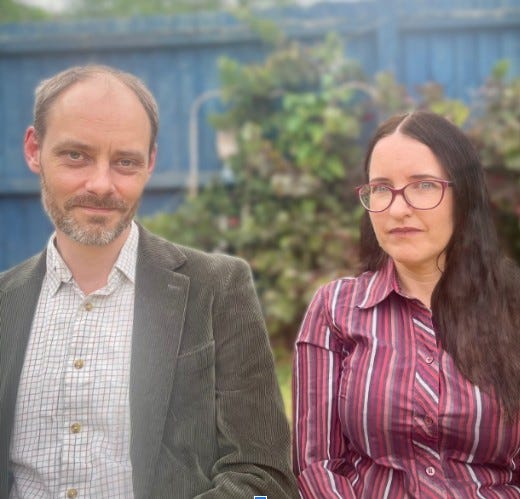
A serious examination of the porn industry and its implications is rarely going to make you popular, particularly in publishing, which has a cultural memory of the Lady Chatterley’s Lover trial and the loosening of censorship which sprang from that. However, Jo Bartosch and Rob Jessel persisted and have produced a very readable book which examines what is going on and why we all need to be concerned. We are delighted to welcome Jo and Rob to Tales from Publishing’s Coalface.
This book details a vital aspect of modern culture—namely the normalisation of porn. Why do you think the problem has been overlooked?
JB: Largely because thirteen million adults in the UK visit porn sites every month. That is a lot of wankers, defensive addicts, who don’t want their habits examined. So any criticism of pornography is met with sneers, slurs and the insinuation that you are prudish, bigoted or too traumatised by male violence (aka ‘hysterical’) to be taken seriously. Added to that, using pornography is still framed as personal choice, rather than a social catastrophe.
In that context, it is no surprise that being anti porn has become a low status view. Passing judgement, for example telling an OnlyFans performer like Lily Philips that she is harming not only herself but every other woman, has become more of a taboo than filming yourself being penetrated by strangers. Critics are written off as sexually uptight; and whereas women who have aged past caring can shrug that off, younger women in particular are likely to struggle more with those smears.
As ever, when middle-aged and older women lead a campaign, the media and political class instinctively sneer. But their contempt does not alter the basic reality that the commercial rewiring of our sexual imaginations, the hacking of our humanity, is the greatest cultural shift of our lifetimes.
RJ: It hasn’t. There are plenty of people who have been painfully aware something’s going terribly wrong—from the parents wondering what their sons are doing behind locked bedroom doors, to the teachers seeing kids sharing extreme porn (along with ISIS snuff movies). Children themselves are increasingly concerned about their own use of pornography and recognising that sexuality isn’t supposed to feel like this. One of the biggest surveys of Gen Z just found that two thirds admit porn has changed their sexuality, and a third say they’re watching more and more extreme material. It’s the people in power who haven’t spoken up, just like they didn’t on Trans. Then, it was because they were afraid of being called bigots. On porn, I think it’s the fear of being called prudes. But Jo’s absolutely correct: I believe the overwhelming reason for inaction is because the male sex right is so embedded.
What do you think about the alleged ‘furry connection’ to some of the recent outbreaks of political violence in the US (i.e. Trump’s would be assassin and the Charlie Kirk assassin)?
JB: The “furry connection” is not random. It’s woven into a broader pattern we outline in Pornocracy: a growing cohort of socially awkward young men whose identities and politics are shaped not by families, or even schoolfriends, but by pornography.
The industry’s business model depends on keeping users online and pushing them towards ever more extreme and niche material. The result is a pornified online ecosystem of gaming, fan art and discussion boards that rewards fantasy, trapping young men (and some women) in permanent adolescence. It has moulded a cohort of maladjusted porn users who are detached from reality, steeped in sexual entitlement, desperate for belonging and inclined to see the world in stark, Manichean terms.
Furries are perhaps the best known of countless subcultures where such social misfits gather around their sexual proclivities. There is a political dimension to the ‘furry fandom’; according to the International Anthropomorphic Research Project, around thirteen per cent of furries support Antifa. They are fourteen times more likely than the general population to identify as gay or bisexual, and a full twelve per cent identify as “trans” and many have overlapping fetishes.
For some, the costumes and identity offer a bit of escapism from the responsibilities of adult life, albeit with a sexual dimension. But for others it becomes all-consuming, and, like all fetishes, behaviour escalates.
The suspected killer of Charlie Kirk appears to have been deeply embedded in the furry fandom, playing explicit furry games and enjoying pornographic furry art. That immersion blurs the boundary between fantasy and action, which is why Robert and I argued in The Critic that Kirk’s killing should be recognised as the first pornogenic assassination.
What evidence is there for a connection between porn and trans ideology?
JB: If I wanted to be high minded, I would say that transgenderism and pornography are built on the same premise: the reduction of womanhood to a ‘sexual receptacle for male use’. Some trans activists have been explicit about this, most notably the Pulitzer winning academic Andrea Long Chu. So have less prominent figures, such as the dangerous offender Barbie Kardashian, a trans-identified man who on release from prison told reporters he wanted to be a sex doll and to perform in pornography. Ultimately becoming a sex object, in effect a doll who exists to be penetrated, is central to the fetishistic element of transgenderism.
The motivations behind transition tend to be as binary as sex. Whereas men often retreat into a shallow stereotype of ‘woman as sex’, women and girls frequently identify as nonbinary or asexual as a form of escape from that same pornified stereotype.
It is not always simple escapism on the part of girls and young women, however. Just as young men become immersed in pornographic subcultures, many girls are drawn into erotic fan fiction, or ‘slash’, which offers an erotic but resolutely female vision of gay male relationships. Some of these straight women and girls go on to identify as gay men. We dig into these subcultures in some detail in Pornocracy.
RJ: Just use your eyes and ears. Read what they write on Reddit and Bluesky, and other places they talk about their fetish when they think we’re not watching. Look at the porn aesthetics—no transvestite ever wants to look like a fifty-six-year-old librarian. Watch the sissification videos, where men are made to chant the mantra ‘Trans women are women’. The link between trans and porn is like trans itself: so obvious, yet at the same time, so gruesome to contemplate that the brain engages in avoidance tactics. Of course it’s pornogenic—and we need to start saying this; all of us and all the time.
Did the recent survey for Unite the Union which showed that over twenty-eight per cent of the women surveyed had encountered porn in the workplace including being shown it by a manager, colleague or customer surprise you or do you think it underestimates the extent of the problem?
Sexual harassment endemic in UK workplaces, landmark Unite survey finds
JB: It doesn’t surprise me. In fact, it’s one of the things I find both depressing and oddly reassuring about the battles women face: we cut off one head of the hydra and another immediately sprouts.
When I entered the workplace a quarter of a century ago, Page 3 and lads’ mags were still casually strewn about. Sexual harassment was a relatively new concept, and any woman who objected to a pat on the bum or a ‘while you’re down there’ comment was dismissed as uptight. Even a decade after #MeToo, the prevailing view persists that women simply need a thicker skin—as though expecting men to exercise basic self-control is somehow unreasonable.
We won that battle. And now the men who want to humiliate us, who want to put women back in our place, have found a new weapon. Of course it won’t end with being shown porn, soon the bitch boss will have AI porn made of her, the work experience girl will be stripped using a nudify app. The point is the reminder: no matter our job or our achievements, there are always those who believe a woman’s place is to be prone.
RJ: There’s an assumption that ‘pornification’ has to have a human perpetrator, but that’s no longer the case.
In Pornocracy we tell the story of Elizabeth Laraki, who was due to speak at an industry event. The organisers used an AI tool to re-size her profile, and it autonomously decided to show a little bit of her bra. This speaks to the next phase of pornography’s technological revolution: the automation of abuse. Because AI is trained on the most pornified data set in history, the public internet, and because it’s such a male-dominated field, we’ve opened up a new and terrifying vector for pornification—and it won’t be restricted to the workplace, but any space where women’s images are recorded.
What do you feel about the new RSHE statutory guidelines and indeed the Maryland storybooks case in the US? Will this have any effect on the infiltration of ‘porn culture’ into education?
RJ: In a word, No. The new statutory guidance came into effect in 2020, but a year later only a fifth of UK primary and secondary schools had received training on how to teach the curriculum. A further twelve months later, a massive eighty-six per cent of secondary school teachers said they needed more resources and training.
There’s still a lacuna when it comes to materials for teaching about pornography, and the Pornocracy has taken full advantage, as it always does. Miriam Cates’ 2023 report provided a horrifying survey of how embedded pro-porn teaching resources have infiltrated and become embedded in the RSHE / PSHE curriculum. These include lesson plans, slideshows, and other material that say porn isn’t bad for you; that the dangers are ‘unknown’; that you should support the industry by paying for pornography; or that porn is a ‘treat’. Even ChildLine has fallen to the Pornocracy: it published a YouTube video saying porn was ‘fun’ and ‘sexy’ before adding ‘You are over 18, aren’t you? [wink]’. This one video was watched over three million times.
When over half of young people say pornography is their main source of sex education, it’s a scandal that schools are reinforcing rather than combatting this epidemic. It is falling to parents, and even schoolchildren themselves, to take action. I hope we’ll see more cases like Flossie McShea, the seventeen-year-old who is supporting the claim for a judicial review into smartphones after being exposed to beheading videos. Every parent should demand that their schools share all classroom materials relating to pornography. If schools and resource providers refuse by citing ‘copyright concerns’, parents should remove their children from those lessons.
Why should publishing, particularly children’s publishing, be paying attention to these sorts of developments?
RJ: Because it’s an opportunity. Hardly anyone is talking about the emerging crisis of sexuality among young people; children’s authors and publishers have the authority and the audience to address this head on.
Precisely how they do it is up to them. I would say this: Children read because they want to understand themselves and the world around them. They’ve always been naturally curious about sex, relationships, and falling in love. But rather than getting drip-fed this information at the appropriate time—from Princess-and-frog storybooks to the fumblings of Judy Blume — their first exposure to the complexity of human relationships is extreme pornography: incest, child abuse, violence, degradation; anal sex, BDSM, strangulation.
The opportunity for children’s publishing, as I see it, is not just to make the case against pornography, but to make the case for love. Young people today see love not as a life goal, but as a luxury—or even as an increasingly irrelevant option. We urgently need to reforge, in young people’s minds, the broken link between sex and love. As a society, we should be celebrating love in all its forms, whether it’s agape, platonic, or sexual. I’d love to see authors and publishers seize this moment, because without love there will be no one left to buy the next generation of children’s authors’ books.
How difficult was it to get this book picked up?
JB: To be honest it was fine. I had no connections in publishing so pitched the only publisher that popped into my head, Polity. The editor picked it up immediately and while we had the odd quibble over pronouns and alike, she was supportive and gave us the freedom we needed.
How hard has it been to get the mainstream media to pay attention to your book?
JB: Robert and I are both quite driven and have pushed for coverage. But as outlined in the first answer, criticism of pornography is both low status and an implicit challenge to the worldview of those who believe themselves to be progressive. And so, we of course haven’t been invited onto the sofas of daytime TV shows or onto the BBC. I suspect that’s because our message is uncompromising; an implicit challenge to the sensitivities of those who find safety in the soggy middle ground.
RJ: We can’t complain—we’ve had a handful of great reviews in national publications, plus radio and TV appearances. Funnily enough, it’s all been right-leaning media…read into that what you will. The world doesn’t owe us interviews or reviews, but it would be nice if some of the podcasters who soft-soaped Lily Phillips and Bonnie Blue would have us on to give the other side of the story.
What has been the reception for the book?
JB: Readers have been strikingly generous in their praise, welcoming it as the first trade book in years willing to unequivocally condemn pornography. I think the timing has been spot on.
But the book has also struck a chord with pornography’s fanboys, many of whom are pleasingly furious. This includes libertarians who are far more comfortable raging about the damage caused by queer theorists on campuses than acknowledging the socially corrosive effect of what’s staring back at them from their own search histories.
What has really lifted me, though, is the response from young women. I can’t claim it is the best book ever written on the subject, and there are already things I would change (and I am sure Rob feels the same), but travelling around the country and speaking to different audiences, I can see that it is giving many, especially young women, permission to voice their anger about pornography. And witnessing that—the sudden relief and rising fury of young women finally speaking freely—makes every hour spent on this book feel not just worthwhile, but necessary.
What is next for the both of you?
JB: I need a break before I consider anything else.
RJ: The same! I need to catch up with friends and family having neglected them so much while writing Pornocracy.
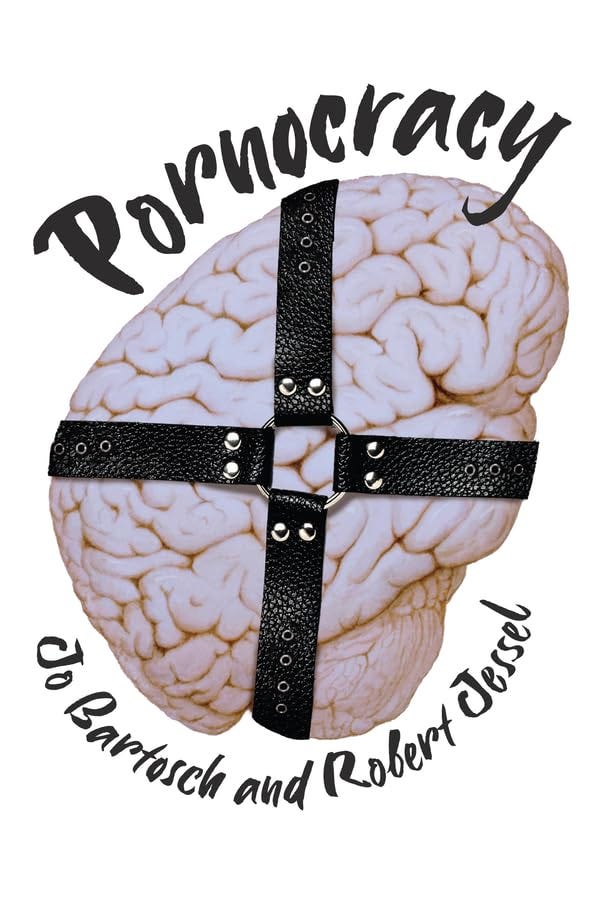
Thanks so much, Rob and Jo! Pornocracy is published by Polity and available from Amazon, The Guardian bookshop, Blackwells and Waterstones.
Jo Bartosch is a journalist and women’s rights campaigner who writes for outlets including the Daily Telegraph, Mail on Sunday, Spiked, UnHerd and The Critic, where she is assistant editor.
Robert Jessel is a writer and campaigner with a particular focus on child exploitation, competing rights claims, freedom of speech, and the impact of new technology on humanity.
This is the third in our series: Tales from Publishing’s Coalface. Please consider subscribing so you do not miss any future interviews.
Miriam Cates’ 2023 report provided a horrifying survey of how embedded pro-porn teaching resources have infiltrated and become embedded in the RSHE / PSHE curriculum. These include lesson plans, slideshows, and other material that say porn isn’t bad for you; that the dangers are ‘unknown’; that you should support the industry by paying for pornography; or that porn is a ‘treat’.
Yes, and these are not misogynists doing this. These are not men or the Patriarchy. They have not "internalized sexism". These are the woke feminists that whitewashed this horror show, precisely because it is such a viscous attack on Patriarchal norms around sex.
Criticism of pornography is conservative-coded, that is why the media won't touch it. Its "patriarchy" coded. Its "telling women what they can and cant do with their bodies". Concerns about pornography are met with allegations of sexism by the "porn literacy" crowd. Chrsitopher Prepper, author of "talk to your boys" partners with Erica Lust to teach "porn literacy" on his substack. The link is there for all to see. Its amazing everyone insists on missing this. Imagine blasting pornography into the skull of every boy, then having the nerve to lecture him about consent and misogyny. We have mind-raped our boys and anyone who objects is accused of wanting to ban the Statue of David.